Ancient Egypt
The Tears of Isis
Tradition linked vervain with Isis, offerings, and rites of purification.
Inside the ManorLeaf archives

3 min read

From ancient Egypt to the druids, the millennial story of vervain, its sacred heritage and calming power.
Common vervain stands out through its quiet action on states of nervous tension. Less dramatic than the great sleep herbs, it works in the background, like a hand resting on inner agitation. Once used for melancholy, persistent thoughts, and fragmented nights, it supports minds that struggle to come back down without forcing them.
With calming and relaxing properties, common vervain supports the nervous system when it remains on alert. Its compounds, including certain iridoids, are studied for their influence on relaxation and sleep onset. It does not force sleep; rather, it helps the body leave tension behind and return to a quieter inner rhythm.
Long before chemistry and pharmacopoeias, vervain was already an emblem. Here is how a few civilizations lived with it.
Ancient Egypt
Tradition linked vervain with Isis, offerings, and rites of purification.
Ancient Rome
The fetiales carried vervain while negotiating treaties and consecrating the spoken word.
Celtic cultures
The plant accompanied stories of ritual gathering, divination, and protection.
Middle Ages
Christian traditions reinterpreted the ancient sacred plant and its popular uses.
North America
Blue vervain also held a place in several Indigenous pharmacopoeias.
An infusion remains the simplest way to enjoy the benefits of common vervain. Let a handful of freshly harvested flowering tops, or one teaspoon of dried herb, steep for about 10 minutes in water heated to around 85 °C.
The flowering tops notably contain iridoids, including verbenalin, as well as flavonoids, tannins, and various phenolic compounds. Together, these constituents contribute to its nervine, antioxidant, and mildly antispasmodic properties.
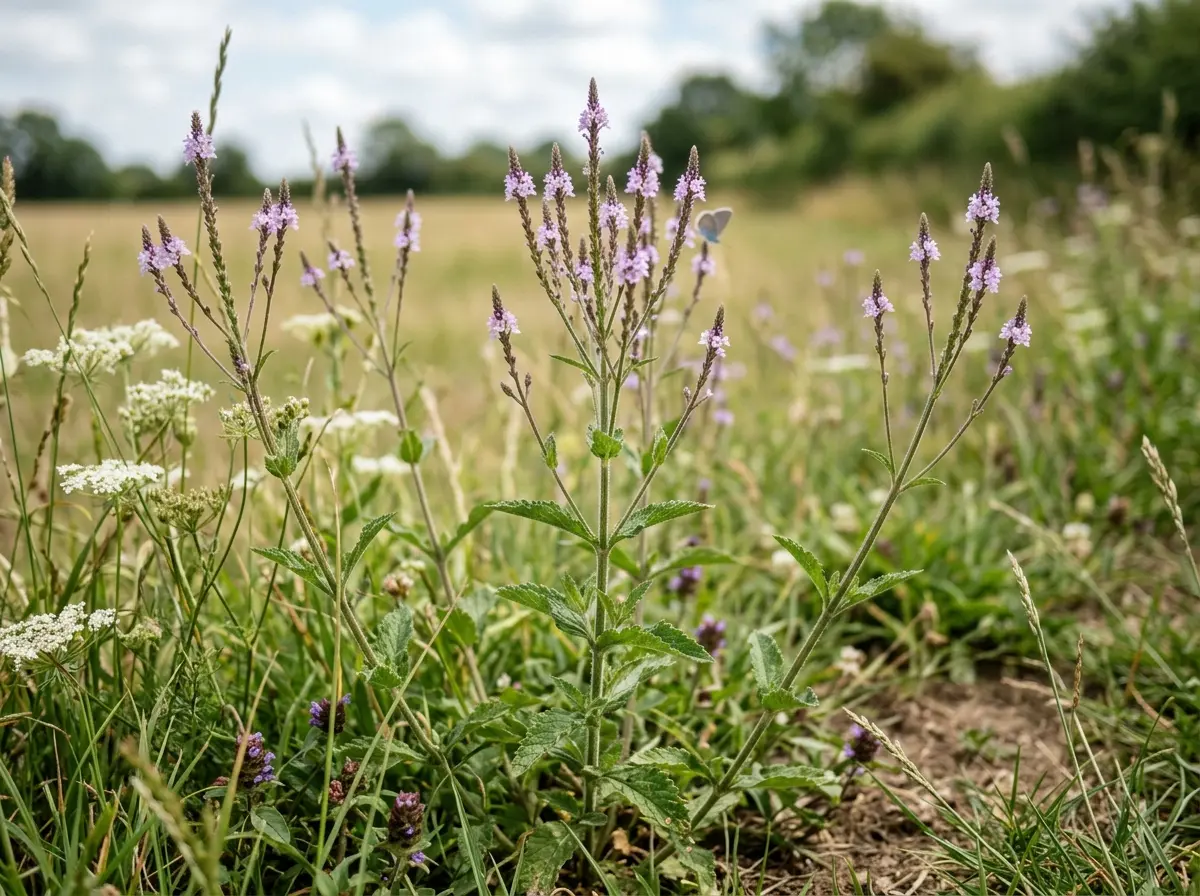
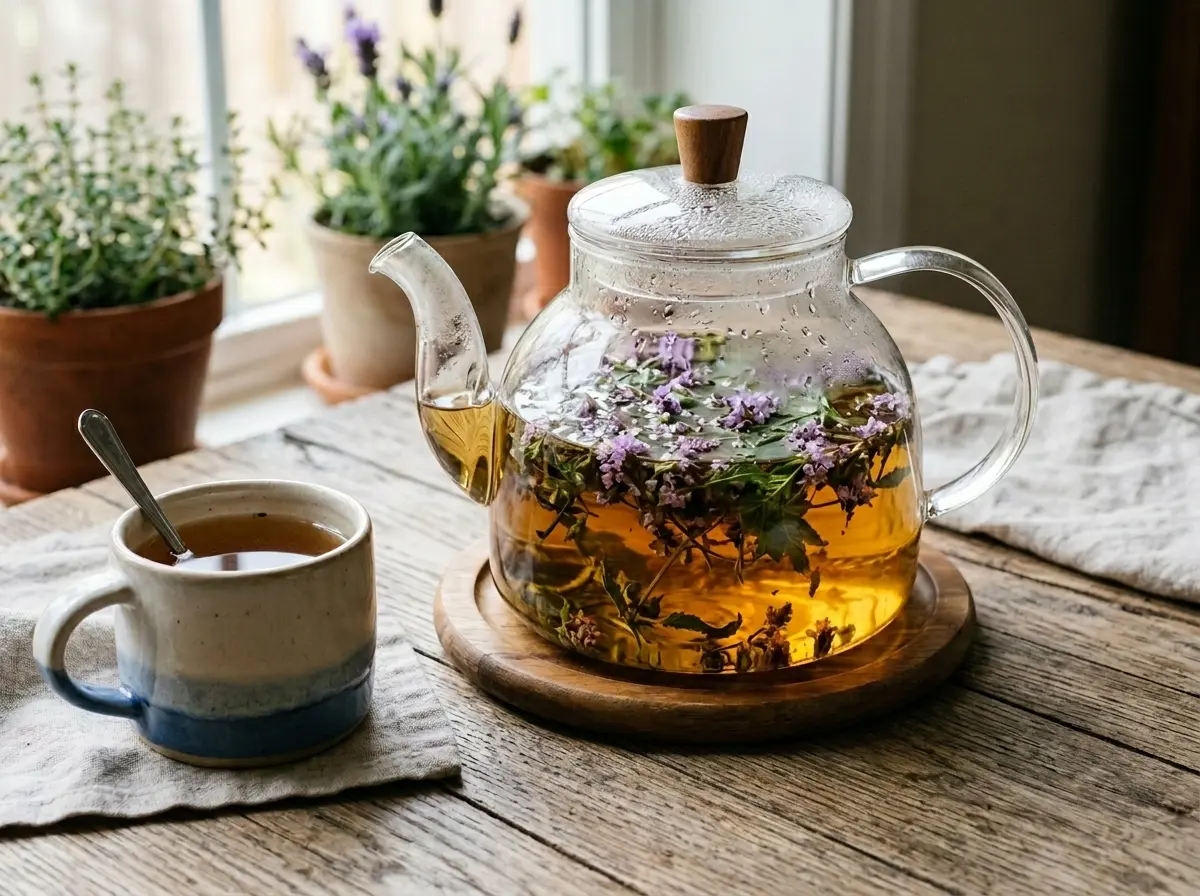
Vervain is traditionally associated with relaxation, digestive comfort, and periods of nervous tension.
Traditionally used to support rest, vervain is currently being studied for certain compounds associated with sleep.
Modern research mainly studies its iridoids, flavonoids, and verbascoside for their potential biological activities.
From ancient Egypt to Celtic traditions, vervain was long associated with purification, protection, and sacred rites.
Vervain contains verbenalin, hastatoside, verbascoside, and several flavonoids that make up its natural phytocomplex.
Pliny the Elder. Natural History, Book XXV.
Hildegard of Bingen. Physica (12th century).
Moerman, Daniel E. (1998). Native American Ethnobotany. Timber Press.
Khan, A. U., et al. (2016). “Anticonvulsant, Anxiolytic, and Sedative Activities of Verbena officinalis.” Frontiers in Pharmacology, 7, 499.
Kubica, P., et al. (2020). “Verbena officinalis — A Review of Its Traditional Use, Phytochemistry, and Pharmacology.” Planta Medica , 86(17).
Bilia, A. R., et al. (2008). “In vitro antispasmodic effect of Verbena officinalis L. extract.” Journal of Ethnopharmacology.
Chevallier, A. (2016). Encyclopedia of Herbal Medicine. DK Publishing.